

Close

Penny Phase Out: The U.S. Treasury has stopped producing pennies. You can still use pennies for purchases or deposits, but once the supply runs out the banks can’t order more. Some cash transactions may round to the nearest nickel. Electronic payments won’t be affected. Learn more at our Penny Phase Out Resource Page.

Learn More

We’re sorry, your browser is not supported.

For the best experience, we ask that you switch to the latest version of Chrome, Firefox, or Edge. If you would like to access your accounts before updating your browser, you can follow the links below.

Machias bank fallback image

Security Center

What Are Phony Invoice and Charge Scams?

Phony invoice scams involve fraudsters posing as legitimate vendors or service providers and sending fake invoices or notifications of charges. Sometimes the scam claims you’ve already paid for a service you didn’t authorize and then directs you on how to dispute the charge—leading you straight into their trap.

The goal? To trick you into clicking a malicious link, opening an attachment, or calling a fake customer service number. Once you engage, scammers may try to steal your account information or gain remote access to your device to install malware.

In the News

A recent example is the EZ Pass smishing scam. Victims receive a text claiming they owe an outstanding balance on their EZ Pass account, with threats of legal action if they don’t act fast. The message includes a link to a fake payment site designed to steal your information.

Common Tactics Used by Scammers

icon/customer-support

Impersonation

Pretending to be a trusted company or even your bank, often using cloned websites or logos.

icon/emergency

Urgency

Creating pressure to act immediately, so you don’t have time to verify the details.

icon/fast response

Multiple Channels

These scams often arrive via email, text message, or phone call.

Red Flags to Watch For

icon/reporting

Unexpected Invoices

Charges for goods or services you didn’t order.

icon/giftcard

Unusual Payment Requests

Asking for payment via gift cards, wire transfers, or other unconventional methods.

icon/error

Errors and Inconsistencies

Incorrect logos, poor formatting, or suspicious contact details.

icon/mobile banking

Urgency and Pressure

Messages that demand immediate action or threaten consequences.

icon/phishing

Verification Issues

Instructions to dispute charges using links or phone numbers provided in the suspicious message.

What Should You Do If You Receive One?

icon/deactivate

Ignore and Delete

Ignore the email or text if you’re confident it’s fraudulent.

icon/online-banking

Verify Transactions

Review your account activity or call your bank directly.

icon/phone

Contact the Merchant Safely

Use official contact information from the company’s website, not the details in the suspicious message.

icon/card-valet

Never Click Links or Call Numbers

Never click provided links or phone numbers in the scam message.

icon/application

Report Suspicious Activity

If you suspect fraud on your Machias Savings Bank account, call or visit your local branch or reach out to our Customer Service Team at 1-866-416-9302.

Stay Vigilant

By recognizing these warning signs and following safe practices, you can protect yourself from phony invoice and charge scams. When in doubt, verify before you act.

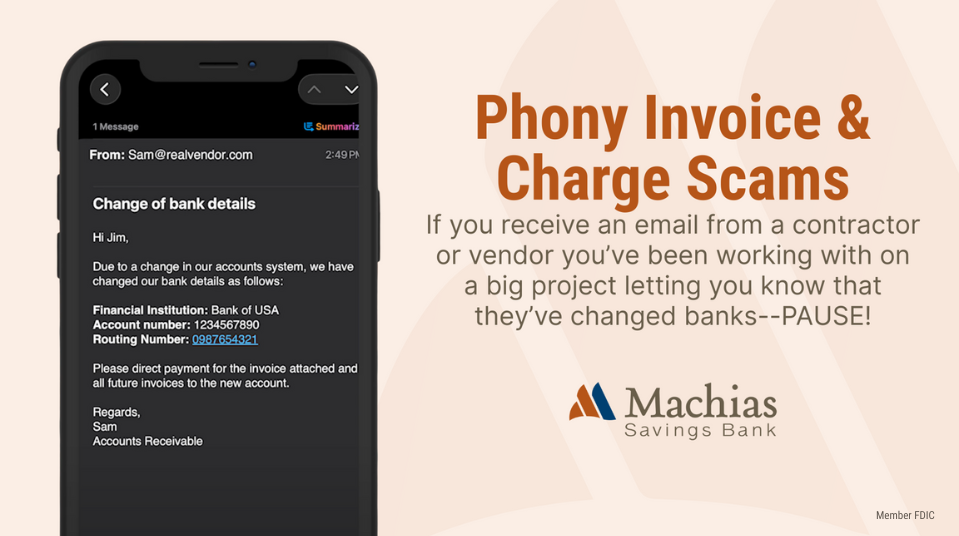
Phony Invoice & Charge Scams

If you receive an email from a contractor or vendor you’ve been working with on a big project letting you know that they’ve changed banks–PAUSE! Watch the latest video in our fraud series to learn how to protect your customers’ information and yours from phony invoice and charge scams.

Close
Important Notice

By following this link, you will be leaving Machias Savings Bank’s website and visiting a non-affiliated third party website. Be sure to review their terms and conditions as you will be subject to their terms of use, and Machias Savings Bank is not responsible for its content. Click Yes to proceed or No to remain in www.machiassavings.bank.

Would you like to proceed?

No
Close

Penny Phase Out: The U.S. Treasury has stopped producing pennies. You can still use pennies for purchases or deposits, but once the supply runs out the banks can’t order more. Some cash transactions may round to the nearest nickel. Electronic payments won’t be affected. Learn more at our Penny Phase Out Resource Page.

Learn More